"Smart Airport, New Milestone — Six Years of Achievements at Macau International Airport"
Over the past six years, Macau International Airport has continuously advanced smart infrastructure, guided by CAM’s core values of “safety, efficiency, and effectiveness”. A series of intelligent upgrades have been completed with remarkable results. With the full launch of the “One ID” smart security and boarding service, alongside innovations such as the RFID Baggage Handling System (BHS), Integrated Airport Management Center (IAMC), Airport Collaborative Decision-Making (A-CDM), and integration with the National Traffic Flow Management system (NTFM), the airport has entered a new era of smart travel. Technology-driven innovation is reshaping operations and services, showcasing the modern face of a smart airport.
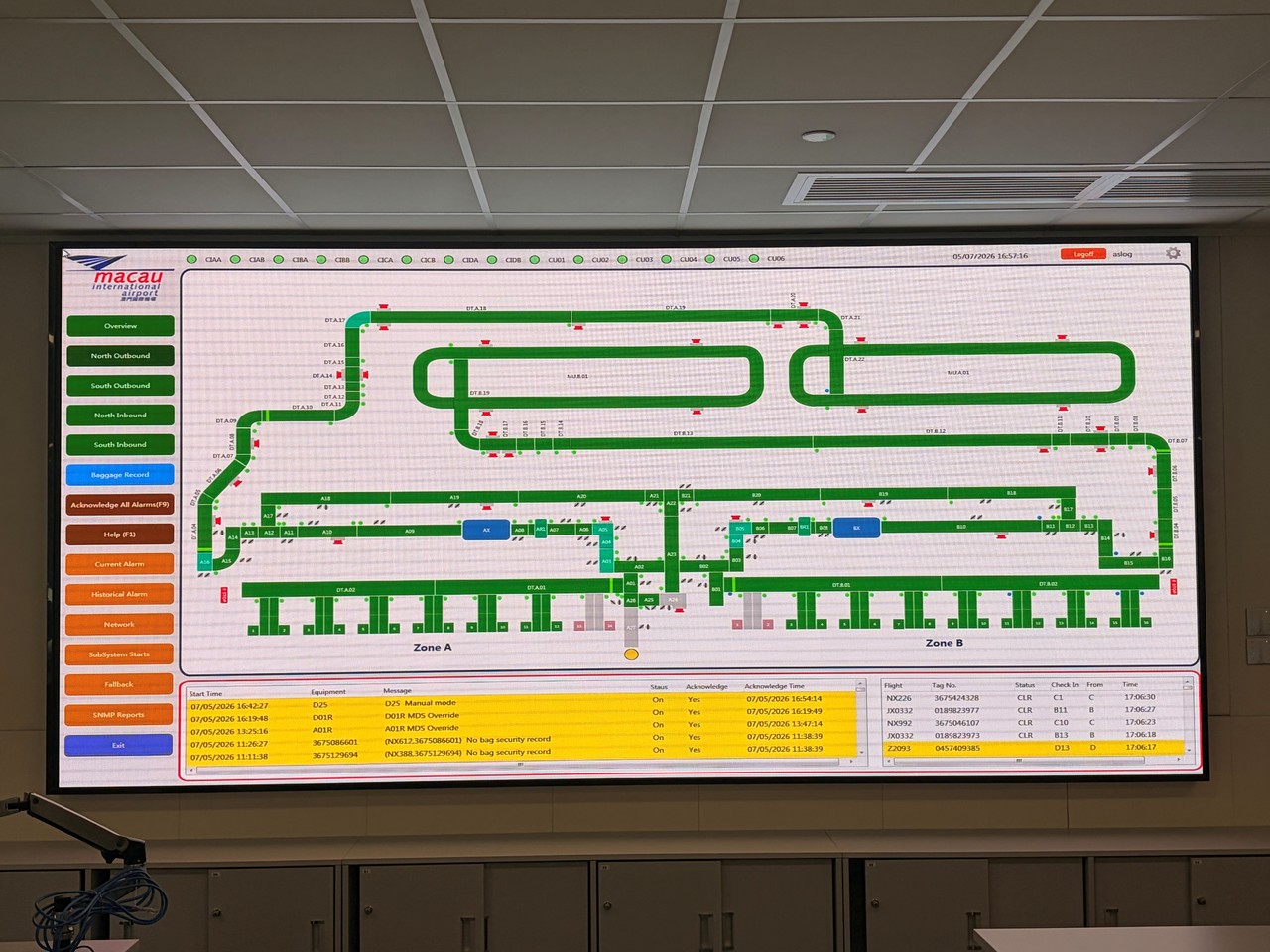
Baggage Handling System Upgrade: RFID Technology Ensures Safety and Accuracy
In 2022, Macau International Airport completed the upgrade of its Baggage Handling System (BHS), fully introducing RFID baggage tracking technology and installing a SCADA baggage monitoring system to provide real-time monitoring of baggage status. This initiative not only improved baggage handling efficiency, strengthened security measures, and optimized the check-in process, but also significantly reduced the rate of lost luggage and enhanced the airport’s capacity to handle 10 million passengers annually.
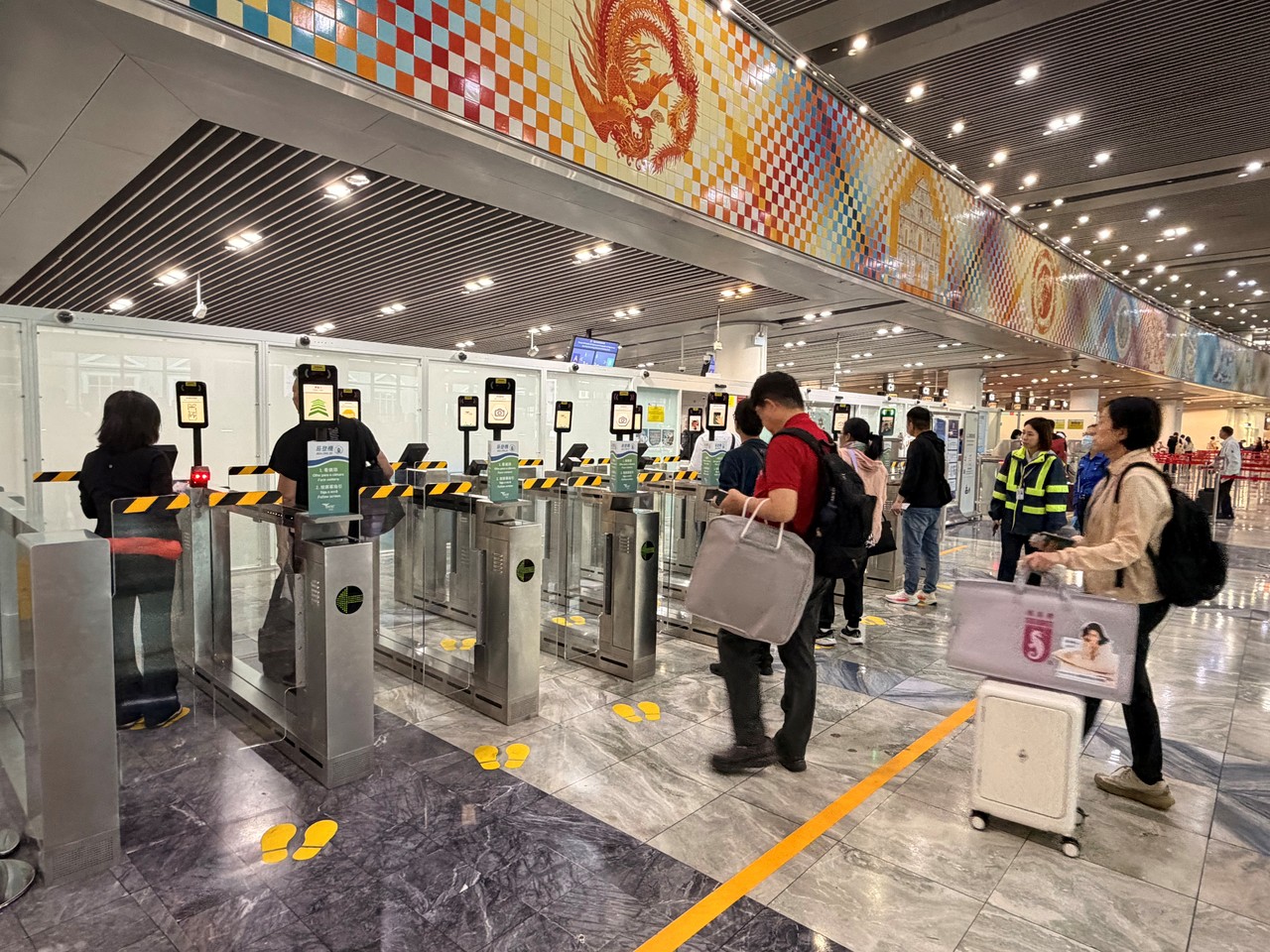
Facial Recognition and Smart Security Lanes: Creating a Convenient New Travel Experience
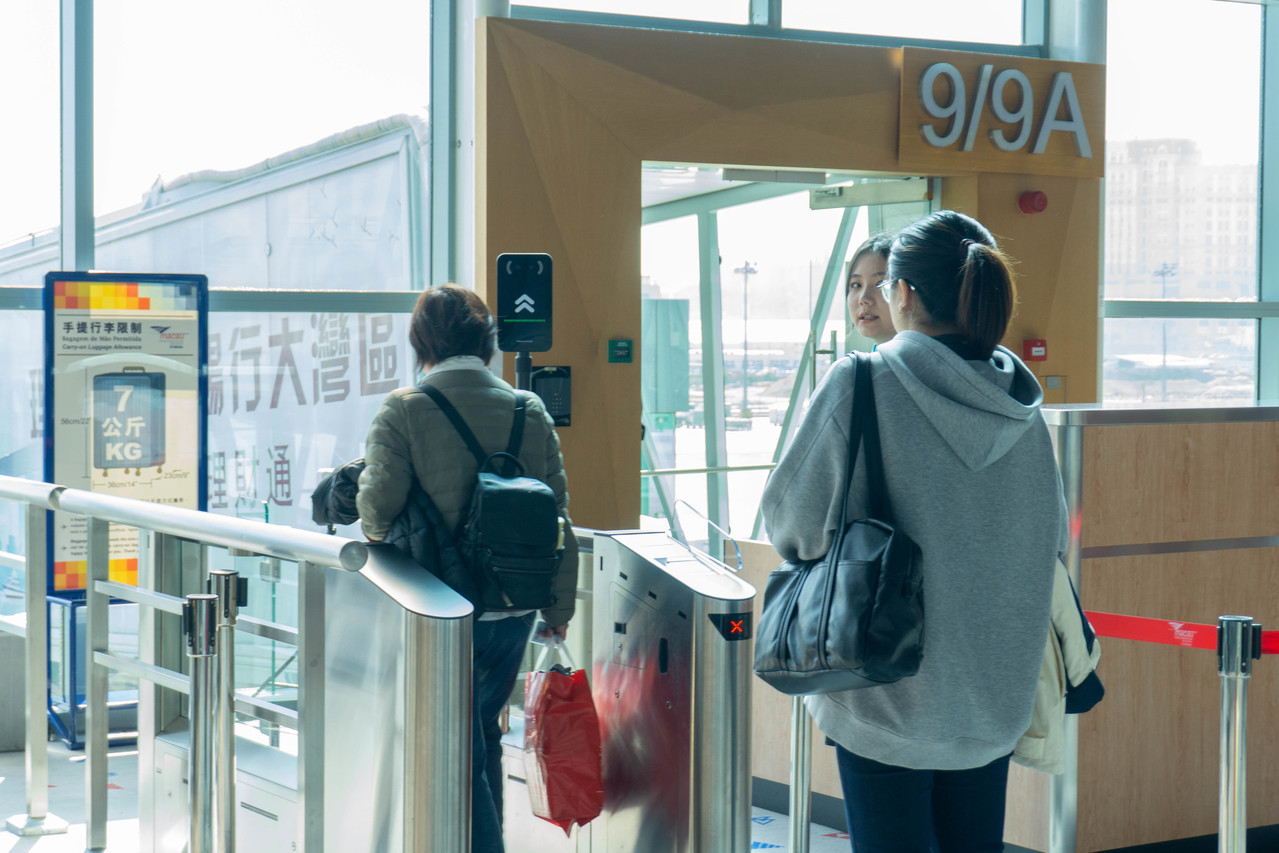
The “One ID” system was completed by the end of 2025 and came into operation in early 2026. Using the facial recognition–based single identity system (One ID), passengers can enjoy a fully paperless process, including pre-security checks and self-service boarding. After the service launch, passengers needed only 19 seconds on average to complete the pre-security procedure, while self-boarding installed at bridge stands further shortened boarding time. In the future, the self-boarding system will extend to all remote boarding gates, allowing every passenger to enjoy faster and more convenient service.
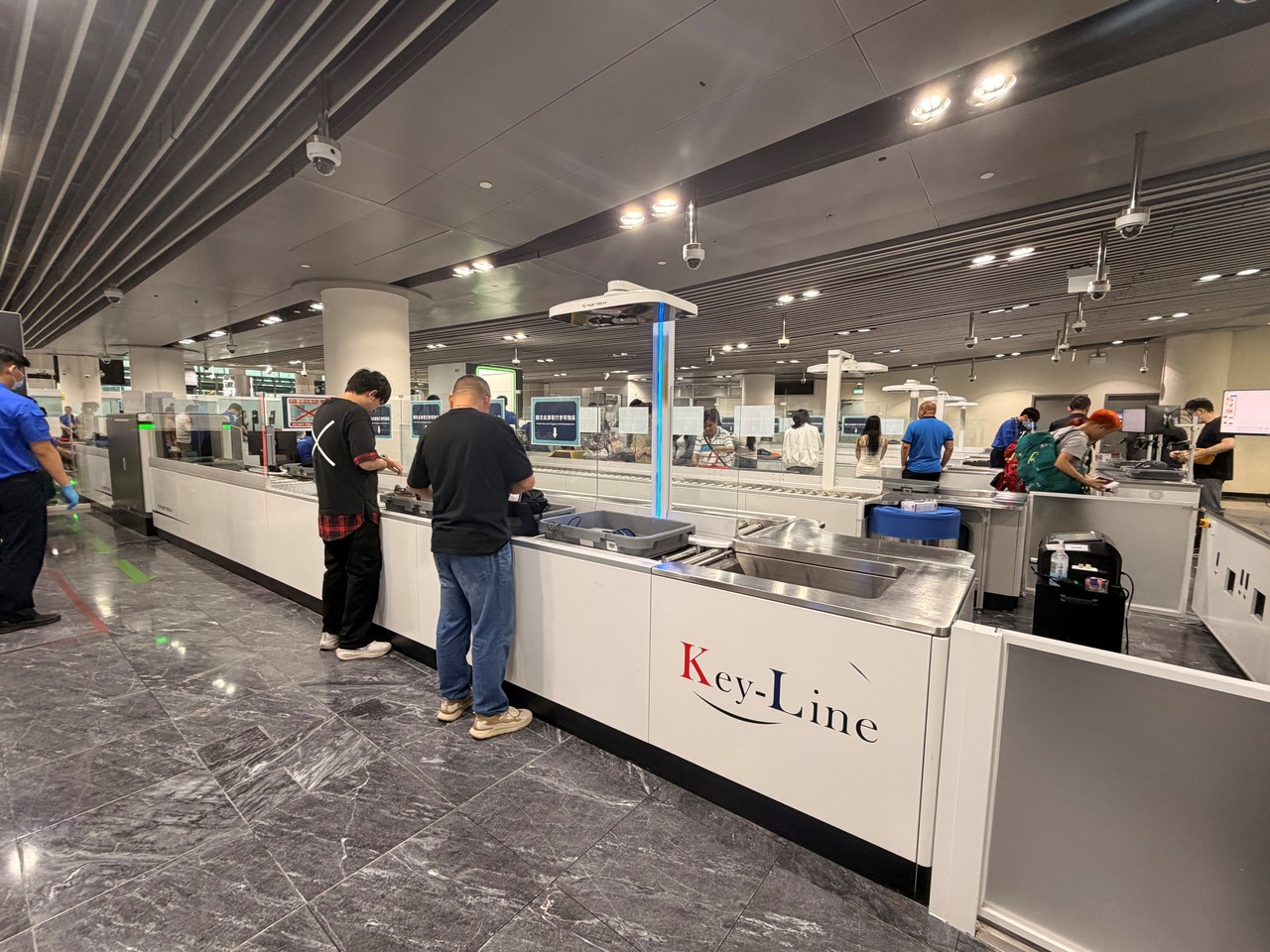
In addition, in the second half of 2025, the airport introduced eight brand-new smart security lanes equipped with millimeter-wave body scanners, automated baggage sorting, and tray recycling systems. Screening efficiency increased by about 1.8 times, with capacity to process around 1,680 passengers per hour.
With the new smart security lanes working in tandem with the Easy Boarding service, clearance times were significantly reduced. Operational data shows that even during peak hours, when the security area processed up to 1,500 passengers per hour, congestion did not occur. On average, passengers completed the entire security procedure in just two minutes, greatly reducing queuing time and demonstrating the effectiveness of the integrated smart system in enhancing both passenger experience and operational performance.
Furthermore, to optimize the travel experience, on March 29, 2026, the airport extended the check-in counter closing time from 60 minutes before departure to 45 minutes. This adjustment better aligns with passenger travel schedules, reduces unnecessary time pressure at the airport, and reinforces the airport’s image as a convenient “Airport in the City”.
Airport Integrated Management Center (IAMC): Situational Awareness Enhances Operational Efficiency
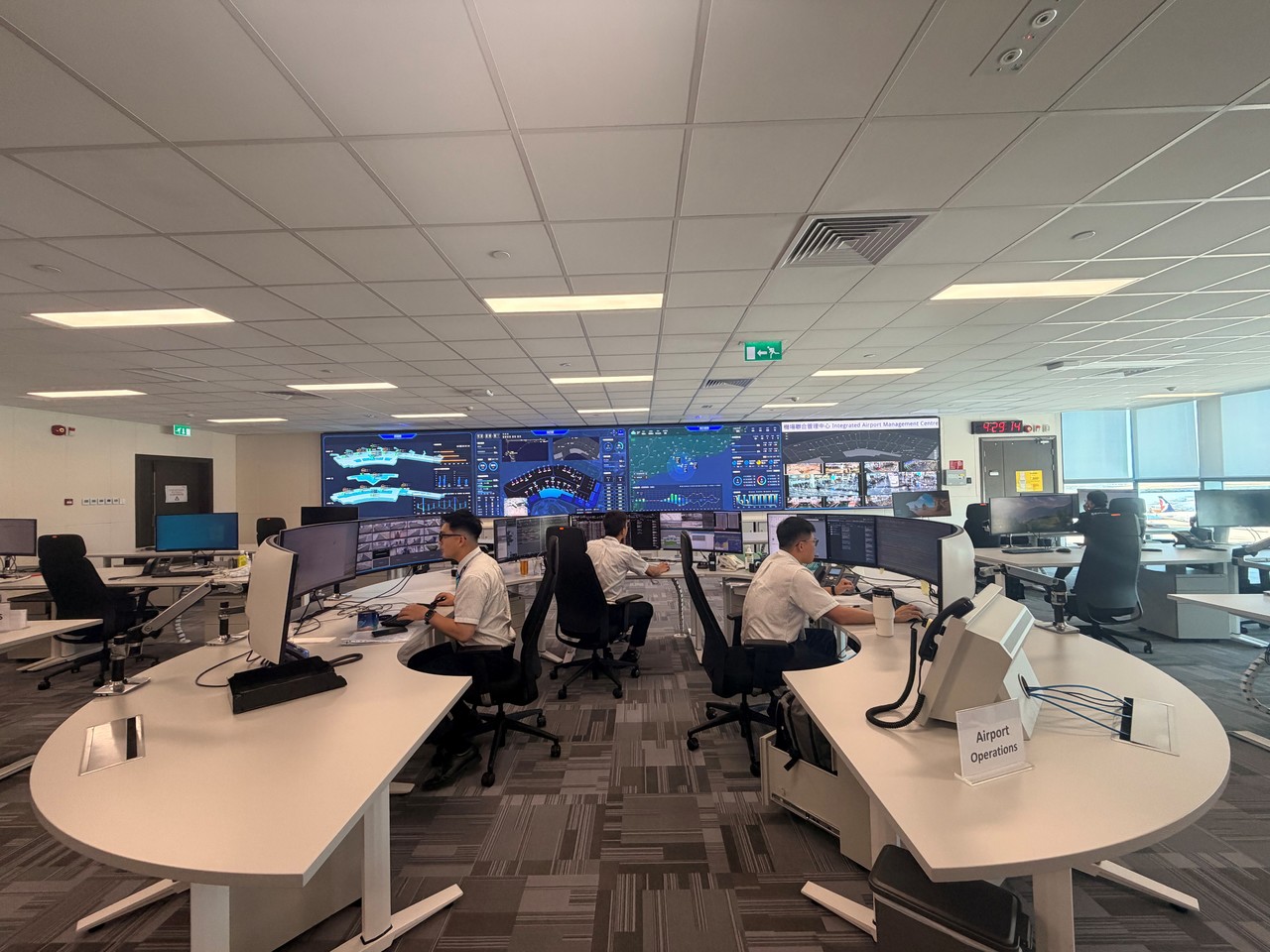
On April 30, 2024, Macau International Airport officially inaugurated the Integrated Airport Management Center (IAMC). The center covers an area of about 650 square meters and includes a joint operations hall, an Emergency Operations Center (EOC), and other supporting facilities. The joint operations hall is equipped with 27 workstations and, for the first time, brings together departments such as airport operations, base airlines, ground handling companies, airport security companies, and engineering monitoring in a single environment, implementing an efficient collaborative operations mechanism. This initiative integrates resources from airlines, ground handling, and security, and enhances operational efficiency and service quality through situational awareness technology, delivering significant and measurable benefits.
Collaborative Decision-Making System (A-CDM): Significant Improvement in Flight Punctuality
As early as 2021, Macau International Airport pioneered the deployment of the Collaborative Decision-Making System (A-CDM). By enabling real-time sharing of flight information and resource allocation, the system effectively reduced delays and improved flight punctuality. The application of A-CDM allows the airport to monitor flight operations with greater precision and enhance overall efficiency through cross-departmental collaboration.
Following the establishment of the IAMC, A-CDM played an even greater role by creating a unified, shared view of flight progress milestones, enabling all units to access synchronized data. In 2025, both arrival and departure punctuality rates have seen significant improvement; flight schedule compliance rose from 85% in 2023–2024 to 90% in 2025, demonstrating the effectiveness of technology-driven collaborative decision-making.
Smart Resource Planning: IAOS
The Intelligent Airport Operations System (IAOS) provides the IAMC operations team with comprehensive and real-time visualization of stand resources, apron activities, and passenger terminal capacity. In 2025, stand usage compliance reached 85%, exceeding the target of 70%. The average usage rate of boarding bridges across all flights was 65%, while turnaround flights achieved a boarding bridge usage rate of 74%, consistently above the benchmark of 55%.
Real-Time Event Management: AOMP
The Airport Operations Management Platform (AOMP) serves as the centralized core for event management, coordinating apron activities, severe weather, operational disruptions, and emergency situations. Through automated notifications and dedicated communication channels, the platform ensures that all operational units receive accurate information in real time, thereby enhancing coordination efficiency and response capability.
Emergency Response Operations: EOC
The Emergency Operations Center (EOC), located adjacent to the IAMC, is equipped with large LED screens, multiple monitors, conferencing systems, and 5G mobile video capabilities. This ensures that the airport can swiftly transition from routine operations to emergency response mode when needed, allowing major units to coordinate centrally and enhancing overall response efficiency.
Integration with National Traffic Flow Management System (NTFM): Joining the Greater Bay Area Airspace Collaboration
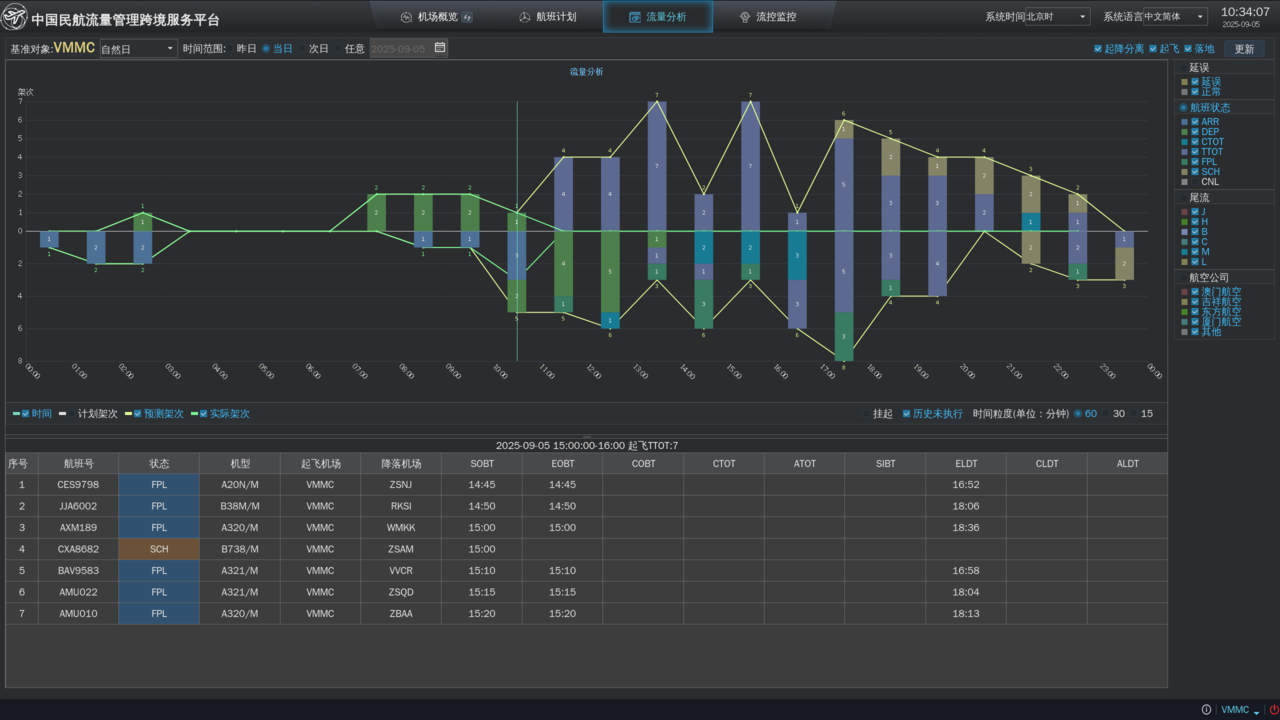
In September 2025, Macau International Airport officially connected to the National Traffic Flow Management System (NTFM), becoming the first cross-border user. This integration enables the airport to monitor the Mainland of China’s airspace traffic in real time, optimize flight planning, raise flight punctuality to over 85%, and strengthen automated coordination with Zhuhai and Hong Kong air traffic control, fully embedding itself into the new framework of Greater Bay Area airspace management. Through system collaboration, Macau International Airport can maintain efficient operations even under complex weather conditions and peak travel periods, underscoring its strategic role within the regional aviation network.
Vision Ahead
Macau International Airport will continue to deepen its smart development, building a modern urban infrastructure that integrates safety, security, operations, and services into an intelligent, user-friendly, and high-performance system. It will actively support the SAR Government’s “1+4” appropriately diversified development strategy, contribute to the construction of the “World Centre of Tourism and Leisure,” and provide citizens and travelers with a safer, more convenient, and smarter air travel experience. Through technological empowerment and cross-departmental collaboration, Macau International Airport is actively exploring new models of smart aviation, helping to drive high-quality integrated development of civil aviation in the Greater Bay Area.